Swifty Finds is reader-supported. When you buy through links on our site, we may earn an affiliate commission at no extra cost to you. As an Amazon Associate we earn from qualifying purchases.
Swifties have quietly become one of the most important forces in vinyl. Her releases routinely top the vinyl charts, and for many younger fans a Taylor Swift album is the first record they ever buy. That is a wonderful way into a hobby that rewards patience and care.
It is also an easy hobby to get wrong at the start. Buy the wrong player, store records badly or skip basic cleaning, and you end up with crackles, skips and warped discs. This guide covers the essentials: what to buy first, what equipment matters, and how to keep your records playing well for years.
Key takeaways
- Start with two or three albums you already love, in their core editions.
- A basic but proper turntable beats a cheap suitcase player for skipping and record wear.
- Store records upright, away from heat and sunlight, in anti-static inner sleeves.
- Brush every record before playing; most skips and crackles start with dust and static.
- Inspect and play new records right away so you can exchange faulty copies.
Our top picks
- 1
First turntable
Audio-Technica AT-LP60XFully automatic belt-drive player with 33 1/3 and 45 RPM, a built-in switchable preamp and a replaceable stylus; buyers call it a great beginner turntable.
Check price → - 2
Everyday cleaning
Audio-Technica AT6011 Anti-Static Record BrushConductive fibers lift dust and help dissipate static before each play.
Check price → - 3
Better inner sleeves
Invest In Vinyl Master Sleeves (50)Rice-paper style anti-static sleeves that buyers say slide in and out easily and do not rip.
Check price → - 4
First album, new era
The Life of a Showgirl (Orange Glitter Vinyl)Twelve songs on one LP: an easy, single-disc start.
Read our review · Check price → - 5
First album, quiet listening
folklore (Beige 2LP)Her most turntable-friendly album, with more than 18,000 ratings.
Read our review · Check price →
Step 1: choose your first albums
Start with the albums you already love, not the ones you think you should own. A record you play every week will teach you more about the format than a sealed collectible on a shelf.
For a first purchase, single-disc albums are the friendliest. The Life of a Showgirl fits all 12 songs on one LP. Midnights is another single-disc option; our Midnights Blood Moon review covers one of its editions. If you want something calmer that really suits a turntable, folklore on beige 2LP is the classic choice.
Ready for something bigger? The Taylor’s Version re-recordings give you the most music per box. Red (Taylor’s Version) runs to four discs at 45 RPM, while 1989 (Taylor’s Version) fits 21 songs on two. For help choosing between core editions and limited colors, read our guide to Taylor Swift vinyl variants.
Step 2: get a proper turntable
This is the most important decision you will make, and it matters more than any variant.
Very cheap all-in-one “suitcase” players are tempting: they are colorful, portable and include speakers. The trade-off is that many have heavy tonearms, basic cartridges and no way to adjust tracking. That combination tends to cause skipping and can wear grooves faster. A lot of the skipping complaints on popular colored records likely come from players like these, although faulty pressings happen too.
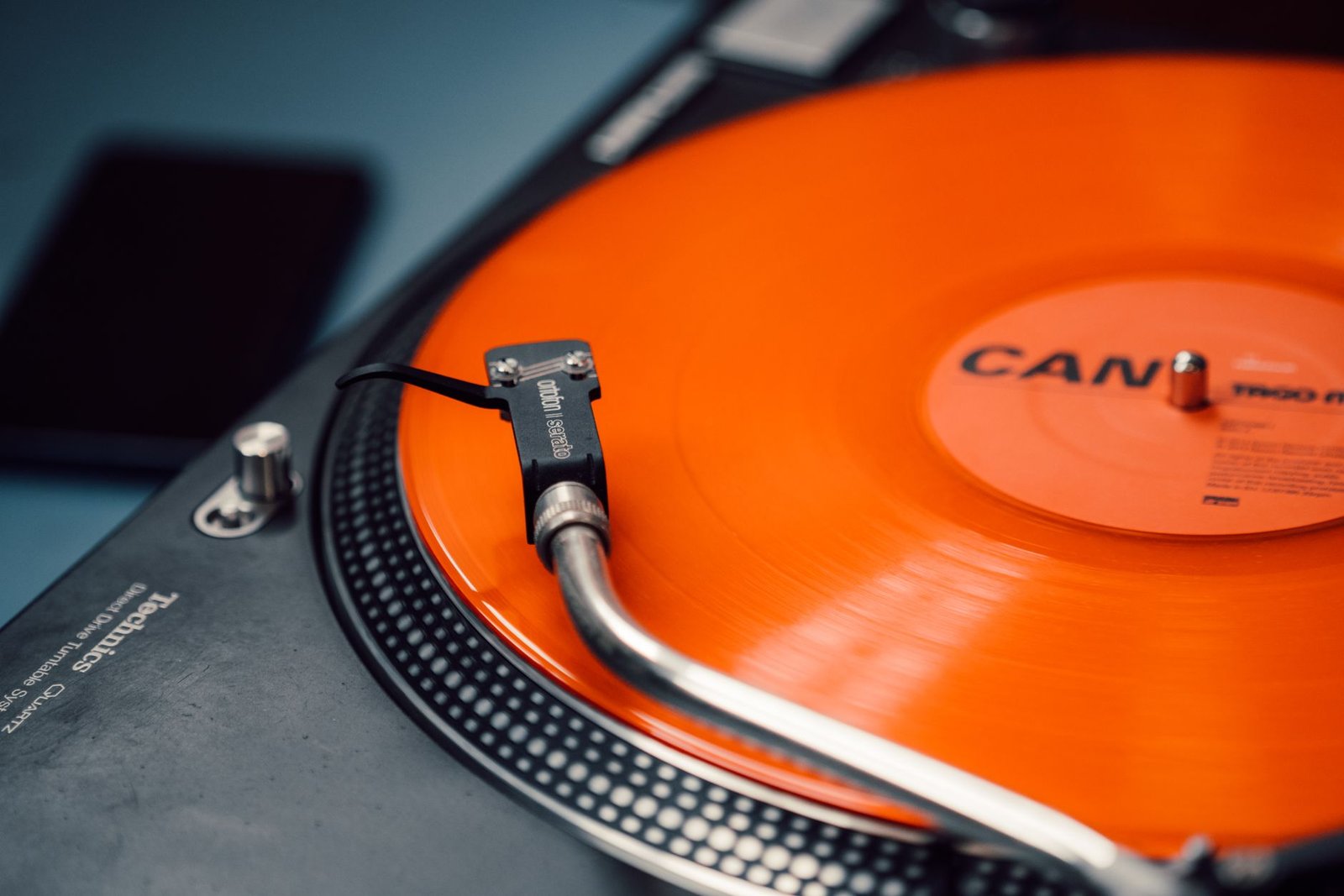
You do not need audiophile gear. An entry-level standalone turntable such as the Audio-Technica AT-LP60X is a sensible starting point. Its listing describes fully automatic belt-drive operation, 33 1/3 and 45 RPM speeds, a die-cast aluminum platter, a replaceable diamond stylus and a built-in switchable preamp, so it can connect to powered speakers or a stereo. Amazon’s summary of more than 13,000 ratings says buyers find it a great beginner turntable that is easy to set up, though some report build-quality issues or units that stopped working.
Whatever you choose, make sure it plays 45 RPM. Several of her sets, including Red (Taylor’s Version), are cut at that speed.
Step 3: set it up properly
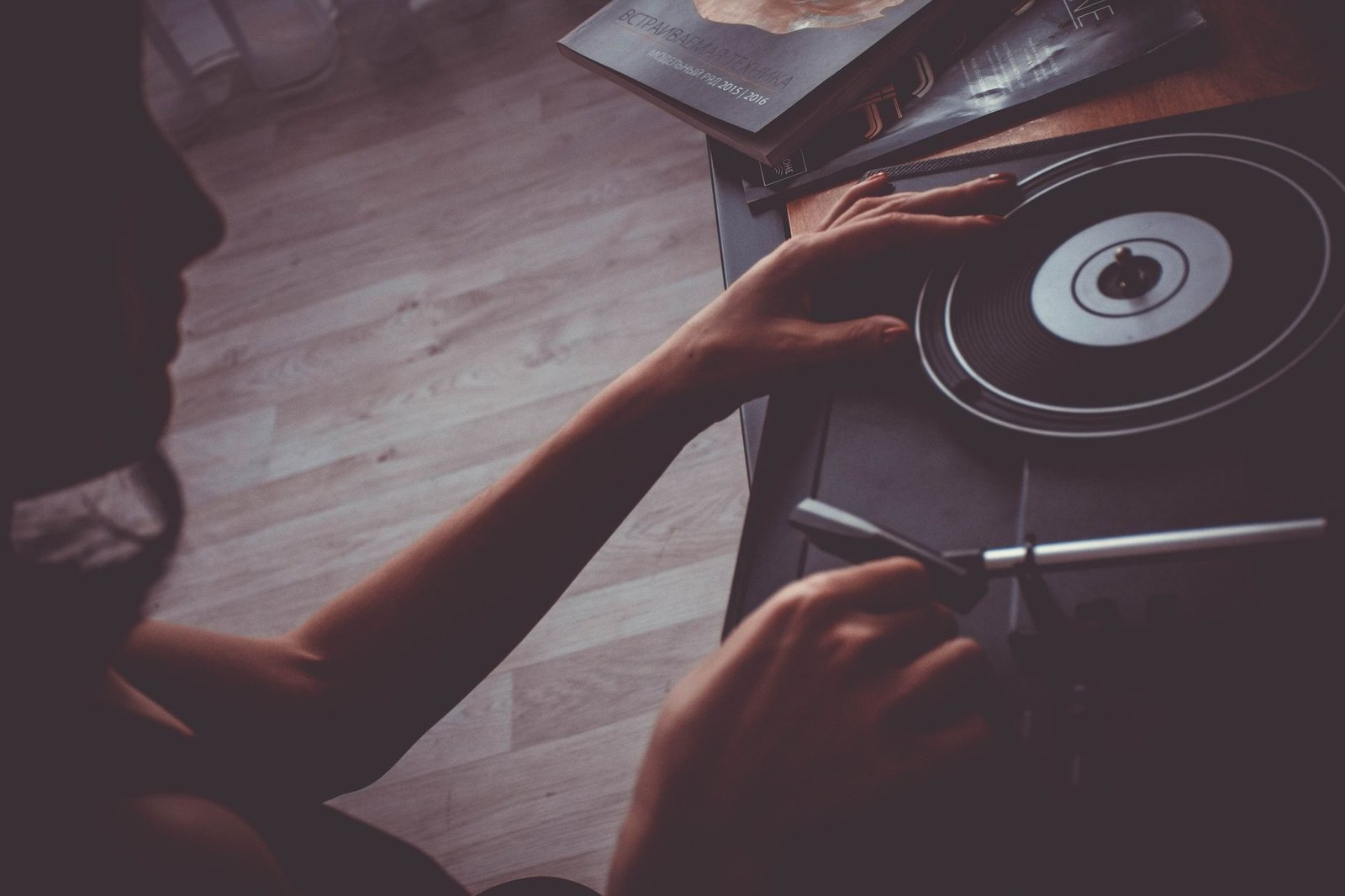
A good turntable can still skip if it is set up badly. Three things matter most:
- Level surface. Use a small spirit level or a phone level app. A tilted platter pulls the stylus toward one side of the groove.
- Isolation. Keep the turntable away from speakers and off wobbly furniture. Footsteps and bass vibration can make the needle jump.
- Correct settings. On adjustable turntables, set the tracking force and anti-skate according to the cartridge manufacturer’s guidance. Automatic models like the AT-LP60X handle this for you.
One official folklore listing on Amazon makes the same point: it recommends a player with anti-skate adjustment and suggests leveling the turntable, even with index cards under the feet.
Step 4: clean before you play
Dust and static are the main causes of crackle and many skips. The fix is simple and cheap: a carbon-fiber or anti-static brush, used before every play.
Hold the brush lightly on the spinning record for a few rotations, then sweep it slowly off the edge. Do not press down; the bristles do the work. The Audio-Technica AT6011 is a widely used option. Amazon’s buyer summary says it is effective on dust and static and gentle on records, though bristle durability gets mixed reports.
For deeper cleaning of a dirty or secondhand record, use a dedicated record-cleaning fluid and a microfiber cloth, and let the record dry fully before playing. Avoid household cleaners, which can leave residue in the grooves.
Step 5: store records the right way
How you store records matters as much as how you play them.
- Upright, never stacked flat. Stacks put pressure on the bottom records and can cause warping and ring wear on the jackets.
- Away from heat and sun. A sunny windowsill or a shelf above a radiator can warp a record in an afternoon.
- In good inner sleeves. Many records ship in paper sleeves that shed fibers and generate static. Anti-static sleeves like Invest In Vinyl Master Sleeves are an inexpensive upgrade; buyers praise their durability and say they slide in and out easily.
- In outer sleeves too, if you care about the jackets. Clear outer sleeves protect artwork, gatefolds and those collectible covers from shelf wear.
Keep the original printed sleeves, lyrics and photo inserts inside the jacket, but put the disc itself in the anti-static inner sleeve.
Step 6: handle records like a collector
Hold records by the edges and the label, never the playing surface. Fingerprints leave oils that attract dust. Return each record to its sleeve as soon as it has finished playing, and close the dust cover when the turntable is not in use.
When a new record arrives, inspect it under good light and play it all the way through within the return window. Buyer summaries for several of her popular pressings mention occasional scratched discs, damaged jackets or skipping. Most are easily solved by an exchange, but only if you catch them early.
Step 7: grow the collection slowly
The joy of a record collection is in the choosing. Add albums as you fall for them, and resist the pressure to own every variant on release day. Limited colors come and go; well-stored records last decades.
If you are buying for a Swiftie who is just starting out, a turntable, a brush and one favorite album make a complete, thoughtful gift. For more ideas, see our round-up of top Taylor Swift gifts for fans, or our review of The Eras Tour Book for a fan without a record player yet.
Frequently asked questions
Do I need speakers for a turntable?
Yes, unless the player has them built in. A turntable with a built-in preamp, such as the Audio-Technica AT-LP60X, can connect directly to powered speakers or a stereo with a line input. Without a preamp you need an amplifier or receiver with a phono input.
Are suitcase record players bad for records?
Many very cheap all-in-one players have heavy tonearms, basic styluses and no adjustment, which can increase wear and skipping. They are fine for occasional use, but if you plan to build a collection, a basic standalone turntable is a better long-term choice.
Should I keep my records sealed?
It depends on why you buy them. Sealed records look pristine but cannot be checked for defects, and return windows close. Many collectors open one copy to play and keep a second variant sealed for display.
How often should I replace the stylus?
Manufacturers often suggest replacing a stylus after several hundred hours of play; check your turntable’s manual. A worn stylus sounds dull or distorted and can damage grooves, so do not wait until it is obvious.